Nepal, a landlocked nation nestled between the rapidly growing economies of India and China, is one of the most climate-vulnerable countries globally, despite contributing less than 0.05% to global greenhouse gas emissions. Its diverse topography, ranging from the towering Himalayas to the fertile Terai plains, exposes it to a range of climate risks, including glacial lake outburst floods (GLOFs), landslides, erratic rainfall, and droughts. These impacts threaten agriculture, water resources, biodiversity, and the livelihoods of millions, particularly marginalized communities like farmers and indigenous groups.
Nepal’s vulnerability to climate change is well-documented. The country has experienced a temperature rise of 0.056°C per year from 1971 to 2014, with projections indicating a further increase of 0.9°C to 4.2°C by the 2080s under high-emission scenarios. Precipitation patterns have become increasingly erratic, with wetter monsoons and drier winters, leading to a threefold increase in rainfall intensity in some areas. These changes have triggered severe consequences. Himalayan glaciers are retreating at an average rate of over 30 meters per year, threatening water supplies for glacier-fed rivers that support agriculture and hydroelectricity. Floods and landslides, the most frequent hazards over the past 40 years, are expected to intensify, with river flooding potentially affecting 350,000 people annually by 2030, up from 157,000 in 2010. Erratic rainfall and droughts reduce crop yields, exacerbating food insecurity in a country where agriculture accounts for 54% of greenhouse gas emissions. Ecosystems, such as those in Chitwan National Park, face threats from shifting species ranges and habitat degradation.
These impacts are particularly acute in Nepal’s diverse regions, from the urban hub of Kathmandu to the mountainous Sindhupalchowk and the agricultural Terai of Chitwan.
A newly published study conducted across these different geographies highlights a significant divide in how climate change is perceived, emphasizing the influence of personal norms and daily experiences over formal education in shaping environmental actions.
Results of the surveyed among various socio-economic and cultural backgrounds uncovered not just a gap in climate awareness but an epistemological chasm: one that separates the scripted certainty of institutions from the organic wisdom of lived experience. At its core, the research suggests that true, actionable knowledge is not merely taught; it is felt, internalized, and remembered in the soil of one’s everyday life. Professionals, shaped by global discourse and formal education, speak of melting glaciers and atmospheric carbon. Farmers, grounded in earth and seasons, speak of failing crops, unseasonal rains, and the growing unpredictability of life. These are not contradictions, but parallel truths—truths born of different ways of knowing.
"Formal education and media remain critical for framing the issue,” reflects the lead authors, “but it is the invisible architecture of personal norms and cultural memory that ultimately determines how people respond.”
Indeed, regression analysis in the study shows that personal responsibility is a deeply moral, often spiritual sense of duty, the strongest predictor of environmental action, far outweighing the influence of one’s educational attainment. This suggests that the most transformative climate action springs not from institutional instruction but from a quiet reckoning within.
What emerges is a call for a multi-knowledge adaptation framework—a model that dissolves the hierarchy between scientific and indigenous knowledge, between formal and intuitive understanding. It is an appeal to see wisdom not as a commodity of the educated few, but as something embedded in the rhythms of rural life, in ancestral stories, in the ways people listen to the wind or read the signs of the monsoon.
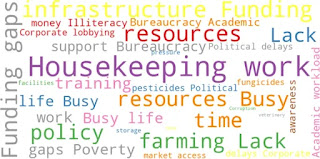
Strikingly, while 62% of respondents had heard of climate change, fewer than one-third perceived it as a pressing threat. Obstacles to action are not rooted in ignorance but in systemic barriers, scarcity of resources, bureaucratic opacity, and the absence of messaging that speaks to local realities.
The authors argue that Nepal’s climate policies, still tethered to top-down, technocratic frameworks, must undergo a paradigm shift. What is needed is not just adaptation but reconciliation: a harmonization of disparate ways of knowing into a common commitment to survival.
They recommend reimagining school curricula, localizing climate narratives, and placing trust in grassroots leadership. But more than any checklist of interventions, their message resonates with quiet urgency:
"Knowledge is not what we hold in our heads, but what we carry in our hearts. A nation’s resilience will not be built in offices alone but in fields, forests, and homes, where climate is not an abstraction but a lived reality.
For policymakers, educators, and climate advocates, the implication is as profound as it is practical: bridging minds and mountains requires more than information; it requires empathy, humility, and the courage to let multiple truths coexist.
Nepal’s Climate Policy Evolution
Nepal’s climate policy framework has evolved significantly over the past two decades, reflecting its commitment to addressing climate change despite limited resources:
- 2010: National Adaptation Programme of Action (NAPA): Identified priority activities to address immediate climate change impacts, focusing on sectors like agriculture, forestry, and water resources.
- 2011: Climate Change Policy: Provided a foundation for integrating climate considerations into national development plans.
- 2015: National Adaptation Plan (NAP) Process Initiation: Aimed to address medium- and long-term adaptation needs, building on NAPA experiences.
- 2019: Updated National Climate Change Policy: Emphasized sustainable, climate-resilient food and agriculture systems and waste management.
- 2021: National Adaptation Plan (NAP): Launched with a $47.4 billion budget to 2050, outlining 64 priority programs across nine thematic sectors, aiming to integrate adaptation into all levels of government.
Nepal’s policies are supported by international frameworks, such as the Paris Agreement, and funding from organizations like the Green Climate Fund (GCF) and the United Nations Environment Programme (UNEP). The country’s Nationally Determined Contributions (NDCs) set ambitious targets, including a 49% greenhouse gas emissions reduction by 2030 and carbon neutrality by 2045 under certain scenarios.
Policy Challenges
Despite these efforts, Nepal’s climate policies face criticism for their technocratic and top-down nature. A 2015 study highlighted that the NAPA and 2011 Climate Change Policy were driven by international aid and global frameworks, often overlooking local socio-political conditions and leading to a “representational deficit.” Key challenges include:
- Institutional Barriers: Contested interests between authorities and limited coordination hinder effective implementation.
- Resource Constraints: Unequal distribution of resources limits support for locally led adaptation (LLA).
- Limited Local Engagement: Policies often fail to incorporate indigenous knowledge and community experiences, reducing relevance and effectiveness.
These critiques align with the study’s findings, which argue that Nepal’s NAP, while comprehensive, leans heavily on centralized approaches, necessitating a shift towards more inclusive, community-driven strategies.
Recommendations for a Community-Led Climate Pathway
The study advocates for a paradigm shift in Nepal’s climate resilience journey, moving from technocratic, top-down policies to a decentralized, community-led approach. This shift involves:
- Multi-Knowledge Adaptation Framework: Integrating indigenous knowledge with scientific data to create tailored adaptation measures. For example, in Chitwan, farmers’ insights into crop diversification could inform resilient agricultural practices.
- Community-Led Initiatives: Empowering local communities, particularly vulnerable groups like women and indigenous populations, to lead adaptation efforts.
- Enhanced Climate Communication: Developing localized messaging to increase awareness and foster personal responsibility.
- Curriculum Reforms: Incorporating climate education in schools to build long-term awareness and capacity.
- Investment in Grassroots Strategies: Increasing resources for community-based projects such as irrigation canals and sustainable farming.
The study’s findings illuminate the critical role of personal norms and local experiences in driving climate action in Nepal, challenging the reliance on formal education and technocratic policies. By advocating for a multi-knowledge adaptation framework, the research calls for a paradigm shift towards inclusive, community-led strategies that empower local voices. As Nepal navigates its climate resilience journey, integrating indigenous wisdom, enhancing localized communication, and investing in grassroots initiatives will be essential to bridge the knowledge gap and build a sustainable future.